
Sandblasting
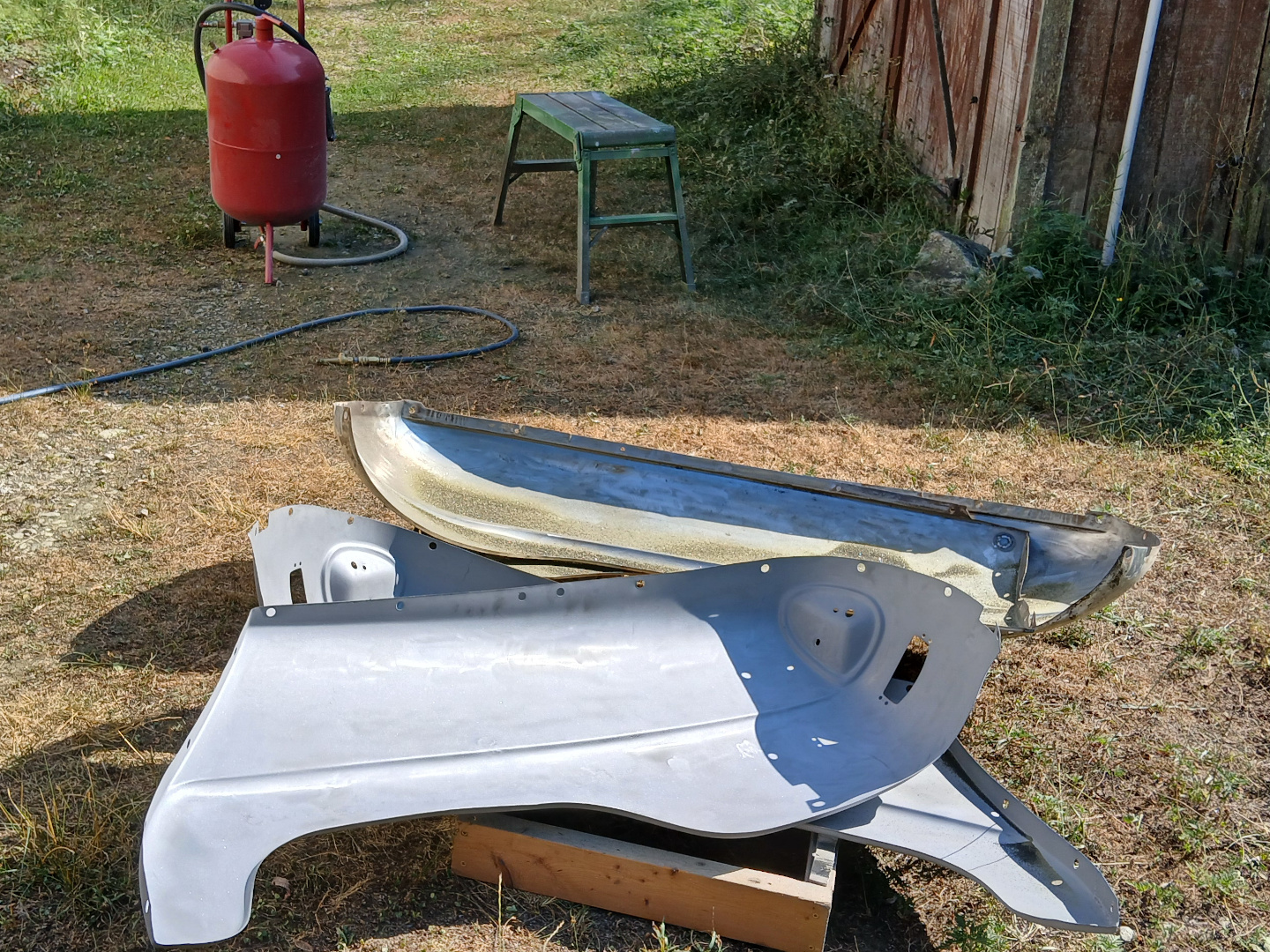
The trusty Harbor Freight sandblaster was put to work on cleaning the fenders and trunk lid. Figure 1 shows the pile of coal slag blasted fenders.
Phosphate and Zinc Treatment
The media cleaned fenders and trunk lid next were treated with Eastwood After Blast, a phosphate/zinc coating product. See Figure 2.
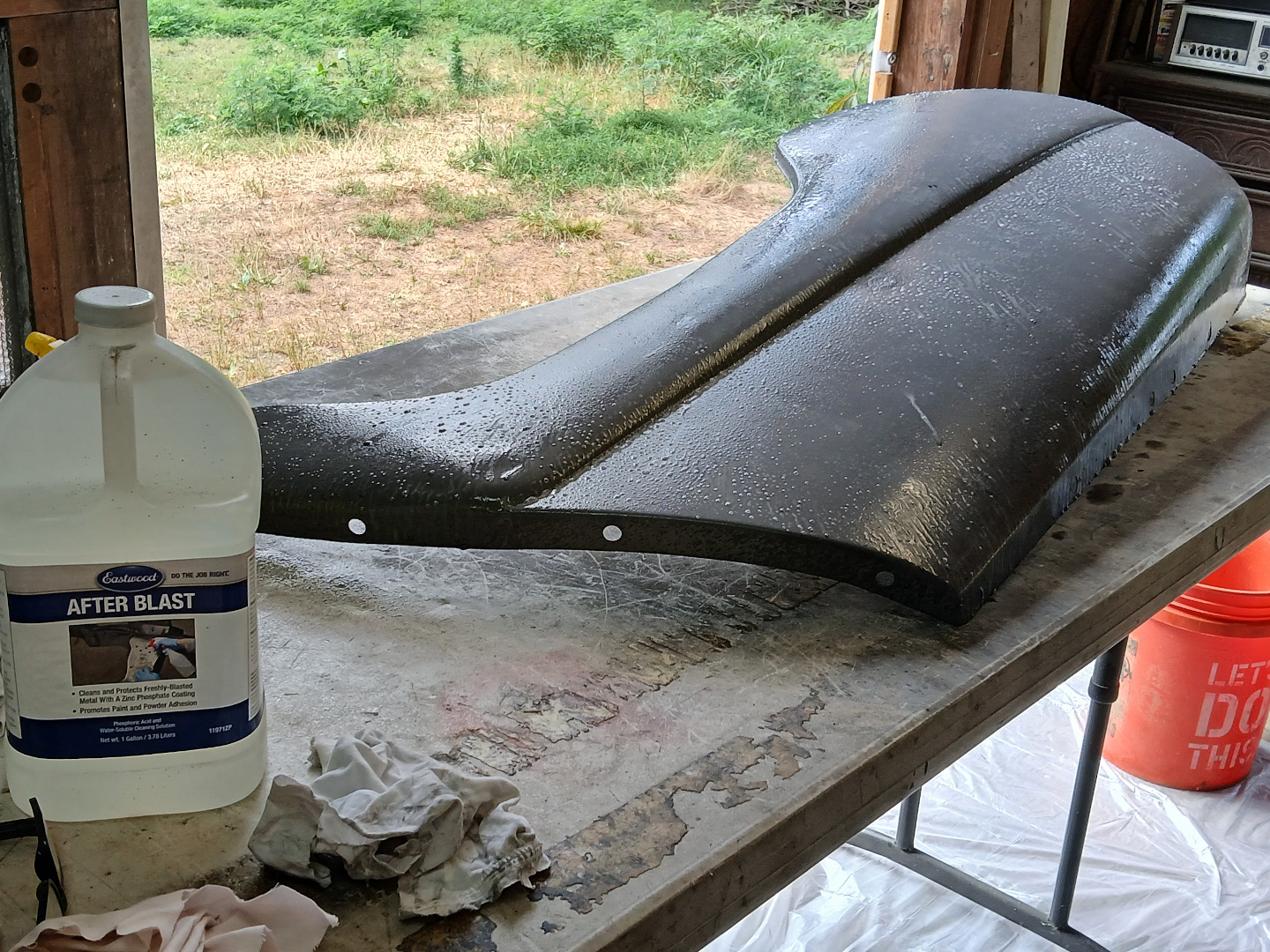
Figures 3 and 4 below show the treated fenders and trunk lid after drying.

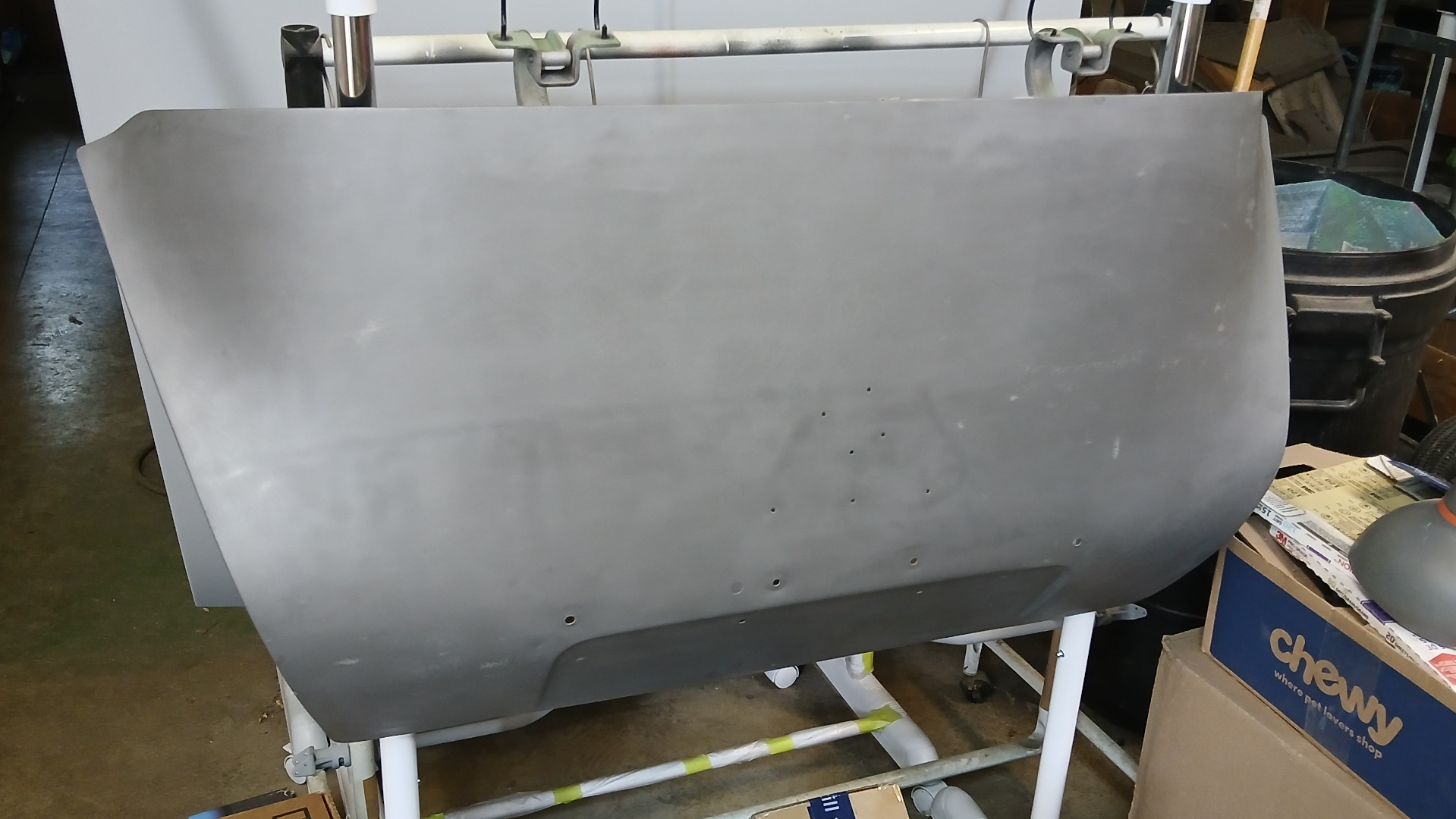
To ensure there was no phosphoric acid residue which might negatively affect paint, all of the treated items were given a baking soda wash and scrub as seen in Figure 5.

The fenders and trunk lid were dried under sunlight as seen in Figure 6, then stored inside to await painting day.

The next post will be about painting.
Well done! Thank you for posting. Your blog inspired me to get started (and finish) my 1967 V-4 Monte Carlo project over a 6 1/2 year period.
Cheers!!
Hey, that’s some nice work. I’ve considered the HF sandblaster.
It seems to work well for you. Great tip on the Eastwood After-Blast. How critical are the proportions regarding the baking soda/water rinse?
Looking forward to your next post.
Al Tirella
The HF sandblaster doesn’t work at all if you follow their instructions! The way it works for me is to close the bottom sand valve, open all air valves all the way, including the blast nozzle, and then gradually open the bottom sand valve until just enough media is flowing to work. Closing the blast nozzle will clog it again, so I just shut off the input air and lose a little sand. About the baking soda, I have no idea. I added so much soda it wouldn’t all dissolve.